Understanding Agile Methodologies in Product Development
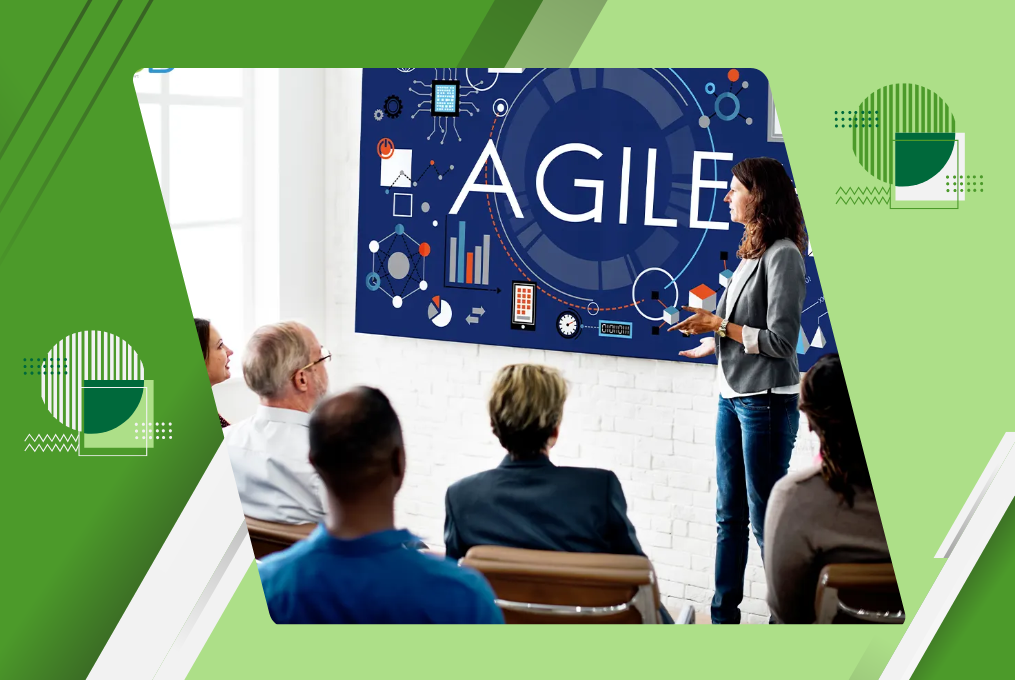
Agile methodologies in product development have developed more rapidly in recent years due to their dynamic and flexible approach. Traditional methods, like the Waterfall model, won’t work nowadays because of the fast pace of technological advancements. The agile methodology has transformed processes not just in product development, but in the whole organization. You must be thinking that “Companies that use agile design principles can complete projects on time” Then let us clear your perception agile projects have a success rate of 64%, compared to just 49% for traditional methods- source from Standish Group's Chaos Report. If you're new to Agile or looking to deepen your understanding of how it works, and why it matters then this blog will be the right piece of content for you!
What is Agile Methodology?
Agile design principles are based on the Agile Manifesto, which values:
Individuals and interactions over processes and tools.
Working on software over comprehensive documentation.
Customer collaboration over contract negotiation.
Responding to change over following a fixed plan
Agile methodologies are a modern approach that is more integrated into product development for their flexibility, collaboration, and continuous improvement, which traditional methods like the Waterfall model fail to produce.
Core Components of Agile Methodology

When companies use agile methodologies in product development, they must enter a certain set of interconnected practices which help them to build products more efficiently while minimising risks. The core component includes: -
Iterative Development: The product is built and tested in small cycles, with each cycle delivering a working version of the product.
Collaboration: Agile promotes teamwork between developers, business stakeholders, and users to ensure everyone's input is considered.
Flexibility: Agile is adaptable and welcomes changes to the project, even if they come late in the process.
Time-boxing: Each stage of development has a set time limit to keep the project on track.
Regular Reflection: Teams regularly assess their work to find ways to improve and adjust their approach.
Measure Progress with Working Software: The focus is on creating functional software and maintaining a steady pace of development.
Satisfy the Customer Early and Often: Agile teams aim to deliver valuable software quickly and continuously meet customer needs.
Technical Excellence: Teams ensure that the product is built with high-quality standards and good design throughout.
Face-to-Face Communication: Teams prefer in-person communication to ensure clear and effective information sharing.
Popular Agile Frameworks
Agile is very flexible and offers various frameworks to suit different team dynamics and project needs: The framework includes:-
Scrum: A framework that breaks work into small, manageable chunks to be completed in flexible order at the team level.
Kanban: Focuses on streamlining workflow, avoiding bottlenecks, and often uses a Kanban board to visualize progress.
Scaled Agile Framework (SAFe): Helps scale agile teams to improve systems, increase employee engagement, and manage costs effectively.
Large-Scale Scrum (LeSS): A framework for scaling Scrum to deliver products with fewer resources.
Feature-Driven Development (FDD): Centers on developers, turning models into builds through fortnightly iterations.
Disciplined Agile (DA): A process framework that combines agile and lean principles to optimize and improve organizational efficiency.
Dynamic Systems Development Method (DSDM): A framework focused on delivering software quickly.
Nexus: A framework that helps scale Scrum by managing dependencies between teams.
The Role of Agile in Product Development

Agile methodologies are critical in product development. Integrating agile design principles can enable faster, more efficient delivery of high-quality products. When companies use this approach, it helps the team to break their work into smaller, manageable iterations, quickly adapt to changes, and respond to customer feedback.
Agile facilitates collaboration across cross-functional teams, helping them align products with customer needs. It speeds up time to market and enhances flexibility and innovation.
For instance, a study by PMI revealed that organizations using Agile saw a 37% improvement in project success rates.
Tools and Technologies for Agile Product Development
The companies use a few tools and technologies for the product development process such as Jira which is used for sprint planning and tracking progress, and Trello used for visualisation tasks with Kanban boards. Likewise, slack or Microsoft is used for seamless communication.
Challenges in Implementing Agile
Companies that use the agile design principles face some challenges which include: -
Adopting Agile requires a cultural shift, which some team members may resist.
Teams without proper agile training may struggle to understand and apply its principles effectively.
Adapting to changes while meeting strict deadlines can be challenging.
Implementing Agile in large organizations across multiple teams can lead to coordination and consistency issues.
Teams may lack the right tools or resources to support agile practices effectively.
Best Practices for Agile Success
Even if agile methodologies in product development have some challenges, when some efficient practices are upheld by various companies and teams then these methods can be a game changer. The practices are: -
Foster a culture of collaboration and transparency.
Invest in training programs to ensure team members understand Agile principles.
Conduct regular retrospectives to identify areas for improvement.
Use tools to streamline communication and workflow management.
Conclusion
Agile is more than a methodology—it’s a mindset. In a world where customer needs and technologies are constantly evolving, Agile provides the adaptability and efficiency needed to thrive. The future of Agile will likely see greater integration with technologies like AI and machine learning, enabling even faster and smarter development cycles.