Understanding Accuracy and Resolution in Precision Height Measurement
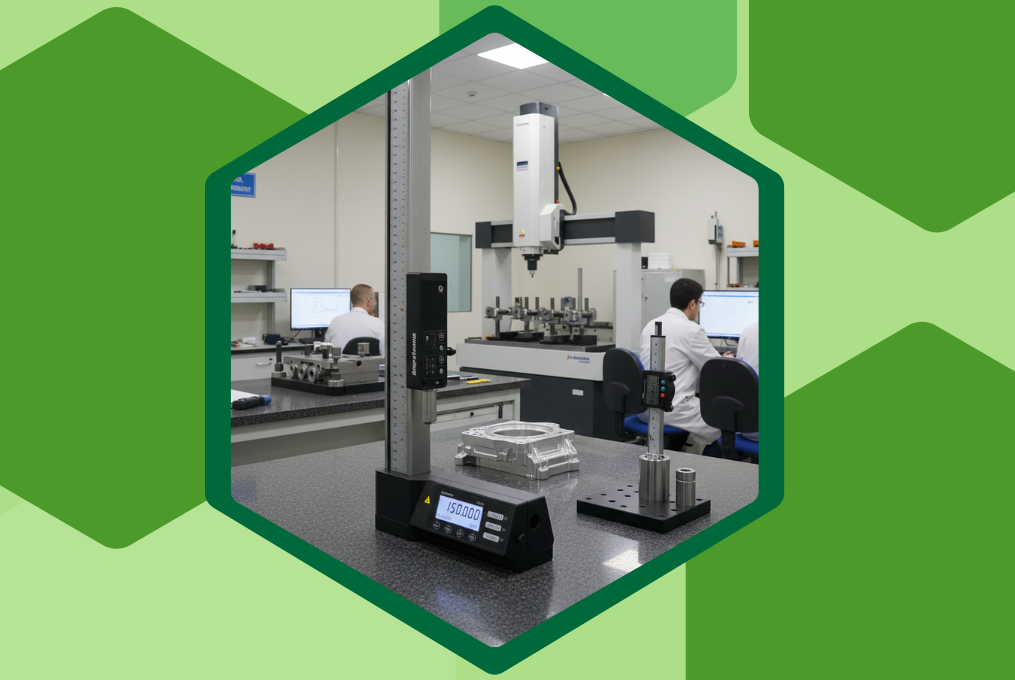
Precision is the language of quality manufacturing. When every micron matters, Precision Height Measurement becomes an essential process for ensuring consistency and reliability. It’s not just about measuring height — it’s about verifying accuracy, maintaining standards, and guaranteeing fit and function. In this blog, we’ll explore how accuracy and resolution influence precise height readings and why understanding both can take your measurement process to the next level.
What Is Precision Height Measurement?
Precision Height Measurement refers to the process of measuring the height or vertical dimensions of objects with high accuracy. It’s used widely in manufacturing, metrology labs, and quality control departments. Tools such as Height Masters, height gauges, and coordinate measuring machines (CMMs) are commonly used for this purpose.
In industries where tolerances are tight, precise height measurements ensure components fit and function correctly. Without proper calibration and reliable measuring instruments, even the most advanced systems can produce incorrect results.
Understanding Accuracy in Measurement
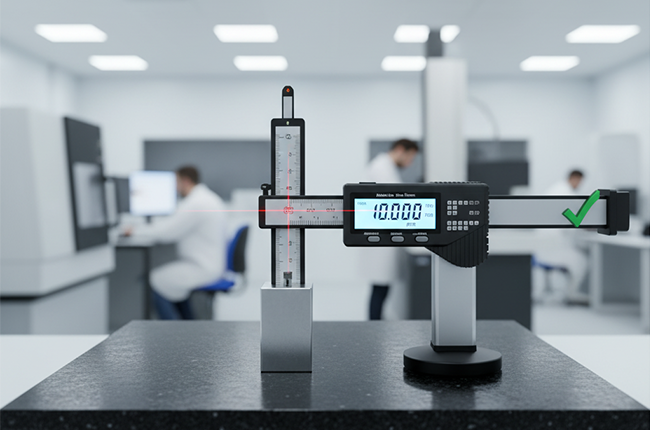
Accuracy in Metrology defines how close a measurement is to the actual or true value. In simple terms, it shows how correct your measurement is. Many factors can affect accuracy — temperature, vibration, tool condition, and human error are among the most common factors.
Maintaining accuracy requires regular calibration and stable environmental conditions. When instruments are properly calibrated against traceable standards, the results become more dependable. High accuracy in metrology also means reduced rework, fewer rejections, and better product consistency.
For instance, if a height gauge shows a reading of 100.01 mm for an actual 100 mm part, it’s accurate within 0.01 mm. That tiny difference can matter a lot in precision engineering.
Understanding Resolution in Measurement
Measurement Resolution defines the smallest change an instrument can detect. Think of it as the “fine detail” in your readings. A higher resolution allows the operator to see smaller increments, giving more precise data.
However, resolution and accuracy are not the same. A tool may display values up to 0.001 mm, but if it’s not accurate, the results are still unreliable. This is where calibration and proper maintenance play a big role.
For example, digital height gauges usually offer better resolution than analog ones, but both need to be verified regularly to ensure trustworthy readings.
Accuracy vs. Resolution: What’s the Difference?
Accuracy tells how correct your reading is. Resolution tells how small the measurable step is. Both are essential for trustworthy Precision Height Measurement.
Here’s a simple way to remember:
Accuracy ensures you’re close to the true value.
Resolution ensures you can detect the smallest difference.
An instrument can have great resolution but poor accuracy if it’s not calibrated. In contrast, a tool with moderate resolution but excellent accuracy can still deliver dependable results.
Factors Influencing Accuracy and Resolution
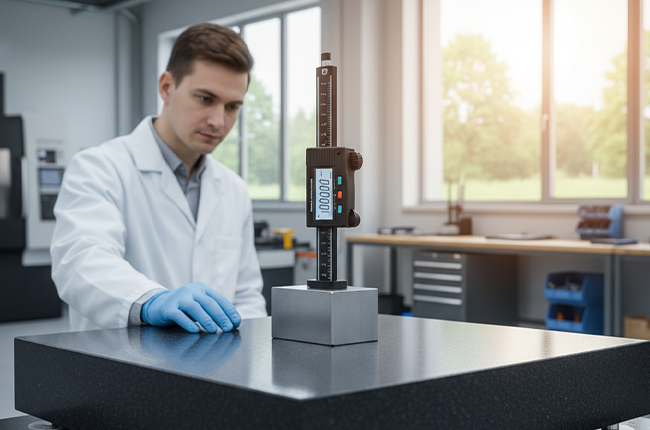
In Precision Height Measurement, several factors affect both accuracy and resolution. Understanding this ensures your results remain reliable and consistent.
1. Environment
Temperature, humidity, and vibration can easily distort readings. Metals expand or contract with heat, changing dimensions slightly. To maintain Accuracy in Metrology and stable Measurement Resolution, always measure in a clean, temperature-controlled setting.
2. Instrument Quality
The design and build of your measuring instrument play a big role in precision. Tools made with stable materials and fine tolerances deliver higher Measurement Resolution and better accuracy. Investing in quality instruments is key to dependable Precision Height Measurement.
3. Calibration
Regular calibration against traceable standards ensures instruments stay true over time. Without it, even the best tools can drift. Proper calibration supports both Accuracy in Metrology and Measurement Resolution, giving you confidence in every reading.
4. Operator Skill
A skilled operator can make all the difference. Correct handling, setup, and reading techniques help avoid errors. Well-trained professionals ensure consistent results and maintain the reliability of Precision Height Measurement.
Small details matter. From stable environments to proper calibration, each factor contributes to precise, repeatable measurements.
Best Practices for Reliable Height Measurement
To keep your measurements consistent and accurate, follow these simple best practices.
1. Calibrate Regularly
Use certified reference standards and calibrate instruments often. This keeps both Accuracy in Metrology and Measurement Resolution in check.
2. Maintain a Stable Environment
Control temperature, humidity, and vibration in your lab. A clean, steady environment ensures tools perform at their best.
3. Choose the Right Equipment
Select measuring tools that offer the right mix of accuracy and resolution. The right equipment makes Precision Height Measurement faster and more reliable.
4. Train Operators Well
Ensure that every operator follows consistent methods. Skilled handling improves accuracy and reduces the chance of measuring errors.
By following these simple steps, you can improve Precision Height Measurement accuracy, ensure repeatability, and maintain confidence in every reading.
Final Words
Every industry that values quality relies on Precision Height Measurement. With the right calibration, skilled operators, and controlled environments, achieving high accuracy and fine resolution becomes second in nature. Precision is not complex — it’s simply about doing the small things right.