Learn About K & Y Factor in Sheet Metal
When it comes to sheet metal work, there are a lot of technical terms that might sound confusing. Two such terms are the K factor and Y factor. These are essential in sheet metal fabrication because they help you predict how the metal will behave when it's bent. If you’re someone working in industries like aerospace, automotive, or electronics, understanding these factors can improve the quality of your work and save time. Let’s dive into what the K factor and Y factor mean, why they’re important, and how they work in sheet metal bending. Don’t worry, we’ll keep it simple!
What is the K Factor?
The K factor is all about how sheet metal stretches when it’s bent. Imagine bending a piece of paper. The outer part of the paper stretches, and the inner part compresses. The same thing happens with metal, but it’s a bit more complex.
The K factor tells us the ratio of the material’s neutral axis to the thickness of the sheet metal. The neutral axis is an imaginary line inside the sheet that doesn’t stretch or compress during bending. It stays neutral! The K factor usually falls between 0 and 0.5, depending on the material and how much it’s bent.
Here’s a quick way to think about it:
0.0 means the metal is being compressed entirely.
0.5 means it’s stretching equally inside and outside.
For most metals, the K factor sits somewhere between these values.
Why is the K Factor Important?
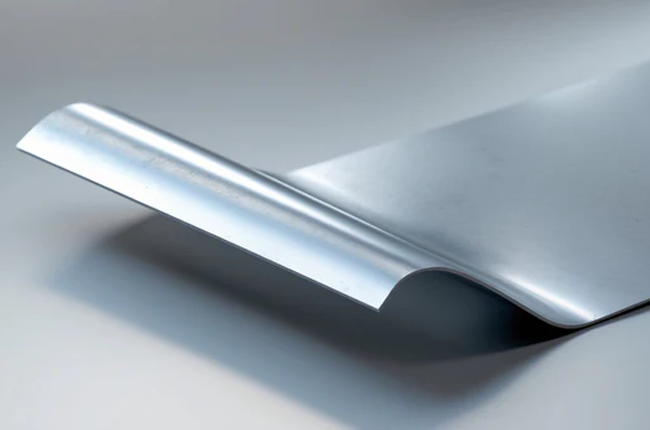
In sheet metal fabrication, knowing the K factor helps you predict the final shape of the metal after bending. This is super useful because metals don’t behave exactly as we expect when bent. Without calculating the K factor, you might end up with a bend that’s too sharp or not sharp enough, leading to errors in your product.
When you know the K factor, you can:
Plan the bend accurately.
Minimize waste of material.
Reduce trial and error, saving time and costs.
In industries like aerospace, where precision is critical, having an accurate K factor makes sure that parts fit together perfectly.
What is the Y Factor?
Now let’s talk about the Y factor, which is closely related to the K factor. While the K factor deals with the neutral axis, the Y factor is more about the bend allowance. Bend allowance is the extra length of metal you need to account for when bending. The Y factor is used in formulas to calculate how much metal will be stretched or compressed when bent.
In simple terms, the Y factor helps adjust the final length of the bent piece to account for material stretching. It’s a correction factor used in designing sheet metal parts.
The Y factor formula is a bit more complex than the K factor. It takes into account not just the thickness of the sheet and the bend radius but also the material's behavior. For example, metals like aluminum bend differently from steel, so their Y factors will differ.
Why Do We Use the Y Factor?
Just like the K factor, the Y factor helps ensure accuracy in sheet metal bending. When you’re working on high-precision projects like automotive parts or machinery, the Y factor becomes important to make sure the parts come out exactly as planned. It allows for better control over the bend radius and ensures that parts will fit perfectly together when assembled.
The Y factor is especially useful for complex bends or when working with thicker metals. By applying the Y factor, fabricators can reduce errors in the final product and ensure that the parts meet the required specifications.
K Factor vs. Y Factor: What’s the Difference?
It’s easy to get confused between the two, but here’s a simple breakdown:
K Factor: Focuses on the neutral axis of the sheet metal and helps predict how much the metal will stretch or compress when bent.
Y Factor: Focuses on bend allowance and adjusts the final length of the bent piece, helping to account for stretching or compression during bending.
Both factors work together in the bending process to make sure that your final product comes out as planned.
Practical Applications of K and Y Factors
Here are a few examples of how these factors are applied in real-life industries:
Aerospace: Aircraft parts require extreme precision. Using the K and Y factors helps ensure that the metal components are bent accurately to fit perfectly in the structure.
Automotive: Car body panels often involve complex bends. Understanding the K and Y factors allows manufacturers to achieve the right shape and fit without wasting materials.
Electronics: In consumer electronics, sheet metal is used in enclosures. Predicting the stretch and compression using K and Y factors ensures that the housing parts snap together without gaps.
How to Calculate K and Y Factors
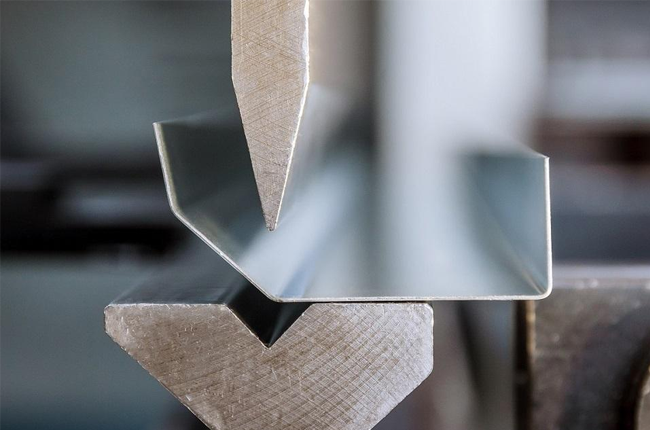
While the theory behind K and Y factors is useful, most modern fabrication software can calculate them for you. However, having a basic understanding of how these factors work will make it easier to design your parts or communicate with engineers.
A typical K factor formula looks like this:
K=Neutral Axis LocationSheet ThicknessK = \frac{{\text{{Neutral Axis Location}}}}{{\text{{Sheet Thickness}}}}K=Sheet ThicknessNeutral Axis Location
Similarly, the Y factor uses a formula involving the bend radius, material thickness, and material type.
Wrapping Up!
Understanding the K and Y factors in sheet metal fabrication is key to making sure your bends are accurate, and your final product meets high-quality standards. Whether you're working on an aircraft component or a piece of machinery, getting these factors right can save you time, materials, and money.
If you're working with a global client base, as we do, these factors help ensure that no matter where your product is made or assembled, it will fit perfectly and function as expected. So next time you’re bending sheet metal, remember the K and Y factors—they’re your secret to success!