How Optical and Video Measurement Improve Surface and Edge Analysis
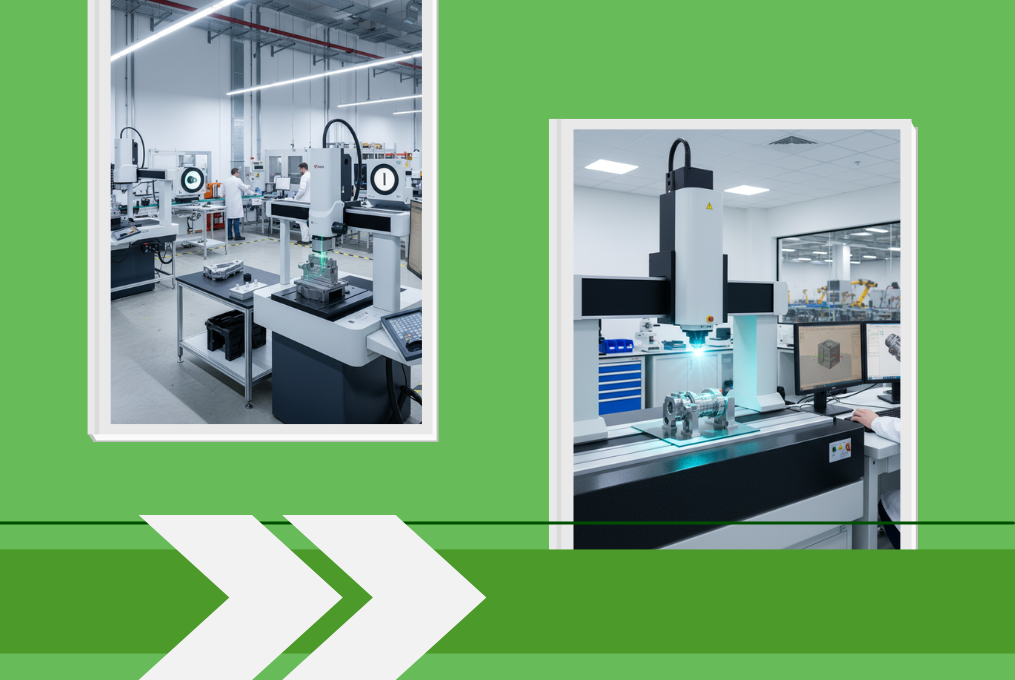
Precision is vital in modern manufacturing. A small error in dimensions can affect product quality and performance. That’s why companies rely on advanced technologies to inspect components accurately. Optical measurement systems have become essential for this purpose. They ensure detailed analysis of surfaces and edges without touching the part, making inspections faster and safer. In this blog, we’ll explore how optical measurement works and its role in enhancing surface & edge analysis using Video Measuring Machines (VMM).
Understanding Optical Measurement Systems
So, how does optical measurement work? At its core, optical measurement captures images of a component using light. These images are then analyzed by software to determine precise dimensions, surface textures, and edge profiles. Depending on the complexity and material of the part, different methods, such as laser scanning, structured light, or white light projection, can be used.
The biggest advantage is that optical measurement does not touch the part. This non-contact method eliminates the risk of deforming delicate components. It also provides faster inspection compared to traditional tools like calipers or micrometers.
How are Optical Measurement and VMM Transform Surface and Edge Quality?
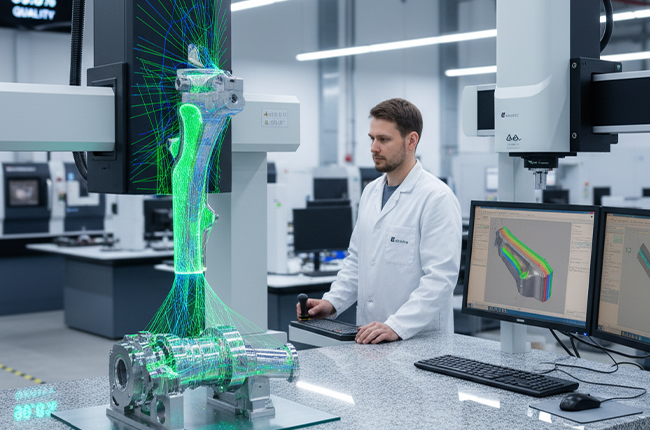
Optical measurement and Video Measuring Machines (VMM) have transformed the way manufacturers inspect parts. Traditional tools often rely on contact-based measurements, which can cause tiny surface defects or distort delicate components. By using cameras, sensors, and advanced software, optical systems capture every detail of a part’s surface and edges. This ensures even the smallest irregularities are detected, improving overall quality.
With Video Measuring Machines (VMM), the captured images are processed in real time. The software automatically detects edges, corners, and surface anomalies, providing highly accurate data for quality control. This approach not only speeds up inspections but also reduces human error, ensuring consistent results across multiple parts.
The combination of optical measurement and video analysis enables manufacturers to achieve precise surface and edge analysis for complex components. From flatness to texture and edge sharpness, every critical parameter is measured accurately.
Key Benefits:
Non-contact measurement prevents damage to delicate parts.
High-resolution imaging captures minute surface defects and edge deviations.
Faster inspection cycles increase productivity and reduce downtime.
Automatic analysis reduces human error and ensures repeatable results.
Integration with CAD software allows comparison with design specifications.
Enhanced surface inspection for scratches, dents, and roughness detection.
Precise edge measurement for burrs, angles, and corners.
Applicable across industries like aerospace, automotive, electronics, and precision engineering.
By combining optical measurement with Video Measuring Machines (VMM), manufacturers can maintain high-quality standards while saving time and cost.
Real-World Applications
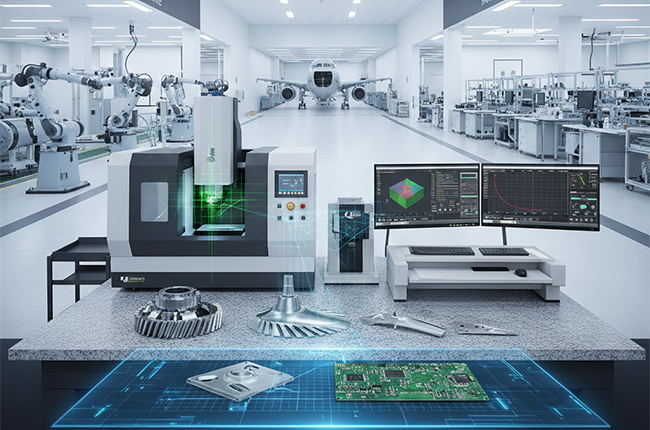
Many industries rely on optical measurements for precision inspection. In automotive manufacturing, it ensures components like gears and engine parts meet strict tolerances. Aerospace companies use it to verify surface finishes and edge profiles on critical components. Electronics manufacturers inspect circuit boards and connectors for defects.
In all these cases, Video Measuring Machines (VMM) combined with optical measurement make inspections faster, more reliable, and highly accurate.
Future Trends
The future of optical measurement is bright. AI-driven analysis can now detect defects automatically. 3D optical scanning is becoming more advanced, enabling even more precise surface & edge analysis. Manufacturers are also integrating cloud-based data storage to track and analyze inspection results in real-time.
Final Thoughts
Understanding how optical measurement works is essential for anyone in precision manufacturing. By combining optical measurements with Video Measuring Machines (VMM), companies can enhance surface & edge analysis, reduce defects, and improve overall product quality. Non-contact, fast, and accurate; these systems are shaping the future of inspection technology.