How Granite Bases Improve Measurement Stability and Repeatability
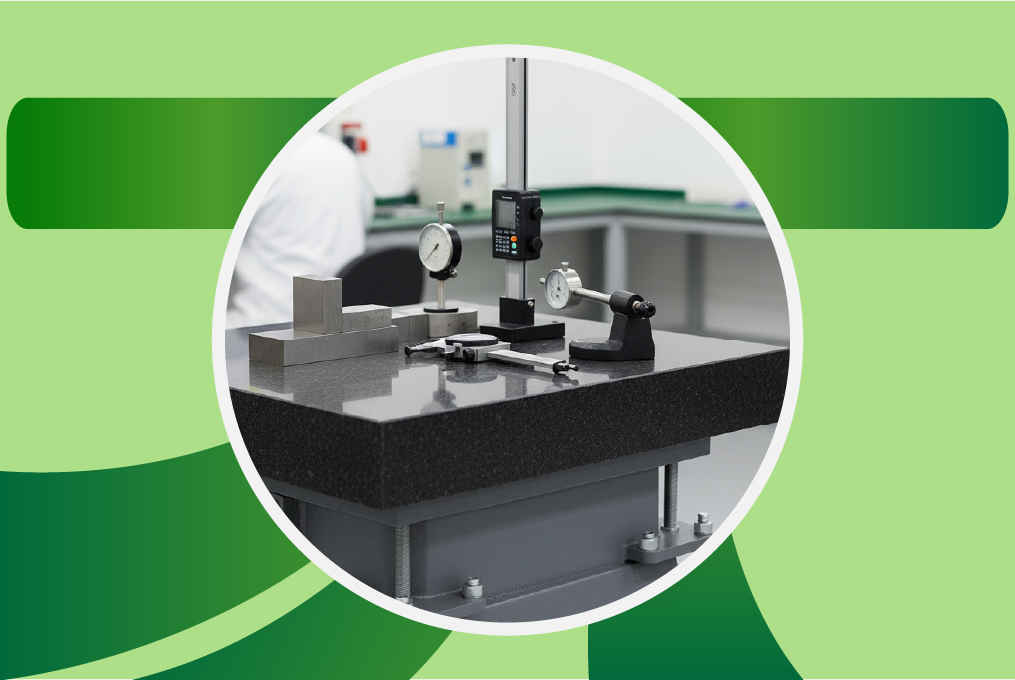
When it comes to precision measurement, even minor disturbances can affect results. A Granite Base for Measuring Instruments offers the perfect solution by providing a rigid, stable, and vibration-resistant foundation. Its natural properties prevent distortion, thermal expansion, and wear, ensuring instruments remain accurate and reliable. From height gauges to coordinate measuring machines, granite bases help maintain consistent alignment and repeatable results. In this blog, we’ll examine the caring tips of granite bases and how they enhance both measurement stability and repeatability in critical precision applications.
What Is a Granite Base?
A Granite Base for Measuring Instruments is a precision-engineered block made from high-quality natural granite. It serves as the foundation for tools such as coordinate measuring machines (CMMs), height gauges, and surface measuring systems. The fine-grained texture of granite gives excellent hardness and wear resistance.
Unlike metal bases, granite does not rust or warp over time. It remains dimensionally stable even under temperature changes. Its non-magnetic nature also prevents any magnetic interference during measurement, making it ideal for sensitive instruments.
Key Properties That Enhance Measurement Stability
When it comes to Measurement Stability, granite stands out for several reasons. Its dense structure absorbs vibrations better than metal, ensuring that measuring instruments remain steady. Granite has a very low thermal expansion rate, which means it does not expand or contract much with temperature changes.
This is crucial in precision environments where even a minor thermal shift can alter readings. The smooth, finely lapped surface of a Granite Base for Measuring Instruments also provides uniform support to devices, preventing tilting or uneven placement. All these properties combined ensure your setup stays stable and accurate.
How Granite Bases Improve Repeatability in Precision Measurement
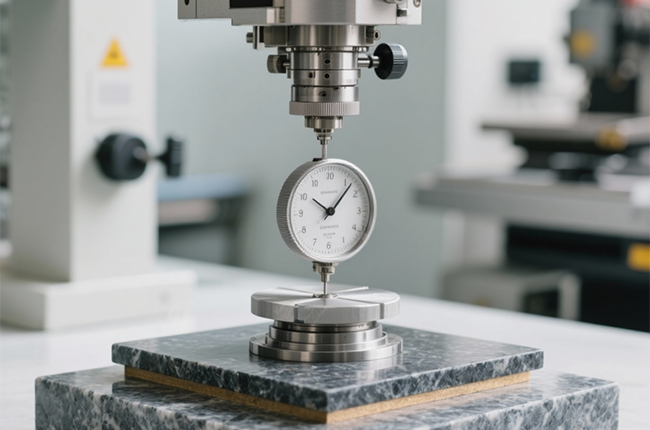
Repeatability in Precision Measurement means obtaining the same measurement result every time under identical conditions. Granite bases enhance repeatability in the following ways:
Consistent Alignment: Granite bases provide a perfectly flat and stable surface, ensuring instruments stay aligned during repeated measurements.
Elimination of Surface Irregularities: The finely lapped surface removes any unevenness that could cause variations in readings.
Minimal Distortion: Even when instruments are placed repeatedly on the base, granite resists bending or deformation, maintaining accuracy.
Vibration Damping: Granite naturally absorbs vibrations from the environment, reducing errors caused by minor disturbances.
Reliable Repeatable Results: Together, these factors ensure that each measurement is consistent and highly accurate, test after testing.
Granite vs. Metal Bases: What Makes the Difference
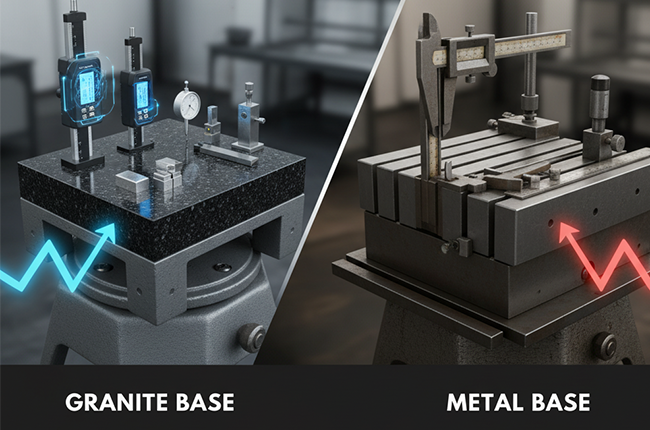
Many traditional setups still use cast iron or steel bases. While they are sturdy, they cannot match the dimensional stability of granite. Metal bases are prone to rust, temperature deformation, and magnetic effects — all of which can compromise accuracy.
A Granite Base for Measuring Instruments remains unaffected by humidity and magnetic interference. It offers long-term flatness, superior wear resistance, and zero corrosion. This translates to fewer recalibrations, better durability, and greater confidence in your measurements. In short, granite provides a better return on investment for precision work.
Maintenance and Care Tips for Granite Bases
Maintaining your Granite Base for Measuring Instruments is simple but essential to ensure long-term accuracy and Measurement Stability:
Regular Cleaning: Wipe the surface frequently with a lint-free cloth and a mild cleaning solution to remove dust and debris.
Avoid Harsh Chemicals: Do not use abrasive materials or strong chemicals that can damage the granite surface.
Periodic Calibration Checks: Use a certified straight edge or optical flat to verify the flatness and precision of the base.
Professional Re-lapping: If the surface loses its flatness over time, have it professionally re-lapped to restore accuracy.
Controlled Storage Environment: Store the granite base in a clean, controlled environment to prevent dust buildup and maintain stability.
Extend Lifespan: Following these steps ensures your granite base remains reliable and accurate for years.
Wrapping Up!
A Granite Base for Measuring Instruments is more than just a support platform — it’s the foundation of precision. Its rigidity, thermal stability, and vibration resistance make it the top choice for metrology labs and quality inspection setups.
By ensuring consistent Repeatability in Precision Measurement and superior Measurement Stability, granite bases help manufacturers maintain tight tolerances and high-quality standards.
Whether you’re calibrating tools or performing fine measurements, choosing a granite base means choosing reliability, accuracy, and lasting performance.