From Tolerance to Perfection: The Science of Accuracy

Every great product, whether it’s an aircraft component, a medical device, or an automotive part, depends on one key factor — accuracy. In manufacturing, accuracy isn’t just a goal; it’s the science that ensures every part fits, functions, and performs as it should. Moving from tolerance to perfection requires deep understanding, advanced technology, and precise execution. At VmakeU, we believe accuracy defines quality. Let’s explore how the science of accuracy drives global manufacturing excellence and why it matters to every industry that values precision.
Understanding Tolerance and Accuracy in Manufacturing
Tolerance is the allowable limit of variation in a physical dimension or measurement. It tells manufacturers how much deviation is acceptable before a product stop functioning correctly. Accuracy, on the other hand, is about producing parts that are as close to the desired specification as possible.
In simple words, tolerance gives space for minor errors, while accuracy aims to eliminate them. Together, they shape the foundation of high-quality manufacturing. Achieving the right balance between these two determines product performance, safety, and reliability.
The Science Behind Accuracy in Manufacturing
Accuracy in manufacturing doesn’t happen by chance. It is the result of a scientific and highly controlled process that includes precision measurement, dimensional inspection, and continuous quality control.
Modern manufacturing uses advanced tools such as laser measurement systems, coordinate measuring machines (CMM), and digital calibration technologies to ensure that each component meets its design intent.
By combining data-driven methods with skilled craftsmanship, manufacturers can reduce deviations, maintain tight tolerances, and produce components that align perfectly with design requirements.
Why Accuracy Matters in Global Manufacturing
Every industry depends on accuracy in its own way. For example:
In aerospace, minor inaccuracies can affect flight safety.
In automotive, precise parts ensure better fuel efficiency and performance.
In medical devices, accuracy means reliability and patient safety.
Accuracy drives product consistency, enhances durability, and builds trust between manufacturers and clients. For global manufacturers, it also ensures compliance with international standards, making their products acceptable and competitive across markets.
How Precision Measurement Ensures Accuracy
Precision measurement is one of the strongest pillars of accuracy in manufacturing. It involves using specialized tools and technologies to verify dimensions at every stage of production.
Techniques such as coordinate measuring, optical scanning, and surface profiling allow engineers to detect even the smallest deviations. These measurements guide the adjustment of tools and machines to maintain exact specifications.
By focusing on measurement accuracy, manufacturers can ensure that the final product meets both functional and aesthetic requirements.
From Design to Delivery: Maintaining Accuracy Throughout Production
Achieving perfection requires consistency at every step — from design to delivery.
Design Phase:
Engineers define tolerances and dimensions using CAD software. A detailed digital model sets the standard for the production line.Production Phase:
Machines are calibrated for precision. Each part undergoes checks to ensure it stays within the defined tolerance levels.Inspection Phase:
Final dimensional and visual inspections confirm whether the product meets the design specifications.
By maintaining accuracy throughout these stages, manufacturers reduce waste, save time, and ensure higher customer satisfaction.
Technology’s Role in Advancing Manufacturing Accuracy

Modern technologies like robotics, AI-based inspection, and computer numerical control (CNC) machines have revolutionized accuracy. Automation eliminates human error, while AI systems continuously monitor production data for inconsistencies.
3D scanning and digital twins also allow manufacturers to simulate real-world conditions and fine-tune product performance before actual production. These technologies help achieve near-zero defects and perfect repeatability — something traditional manufacturing could never achieve.
The shift from manual to smart manufacturing has brought the industry closer to true perfection, where every product is a reflection of accuracy and innovation.
Accuracy, Quality Assurance, and Global Standards
For international clients, accuracy is directly linked to quality assurance. Manufacturers who follow strict inspection protocols and adhere to global standards such as ISO 9001:2015 are more reliable partners.
Quality assurance ensures that every product passes through multiple checks before shipment. It confirms compliance with customer requirements and guarantees long-term performance.
When accuracy meets quality assurance, it creates a foundation of trust that global industries depend on.
The Future of Accuracy in Manufacturing
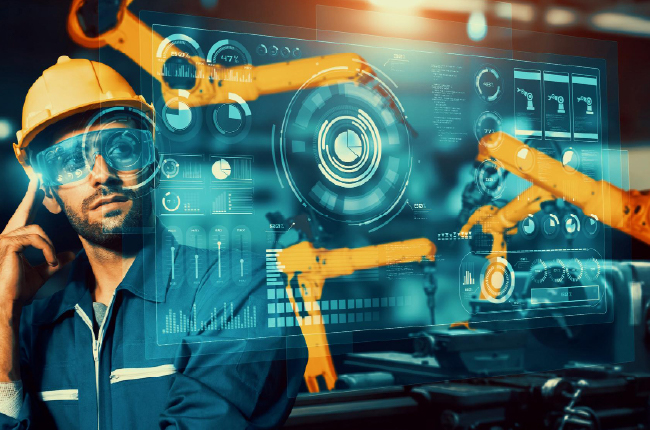
As manufacturing becomes more advanced, accuracy will continue to evolve. The future will rely on smart sensors, AI-based analytics, and real-time feedback systems that can detect errors before they occur.
Global industries are now focusing on sustainability along with precision — aiming to produce accurate parts while minimizing material waste and energy consumption. This balance of efficiency and perfection will define the next generation of manufacturing.
Why Choose VmakeU for Accurate Manufacturing Solutions
At VmakeU, we understand that accuracy is not just about measurement — it’s about commitment. With advanced fabrication technologies, precise machining systems, and a team of skilled engineers, we deliver products that meet the highest standards of tolerance and performance.
Our focus on precision manufacturing helps industries such as aerospace, automotive, renewable energy, and machine building achieve global success. We use cutting-edge inspection systems and continuous quality monitoring to ensure every part we produce stands for reliability and perfection.
If your business values precision, quality, and trust, partner with VmakeU — where every detail matters and every product reflects the science of accuracy.