Design for Additive Manufacturing (DfAM): Key Considerations
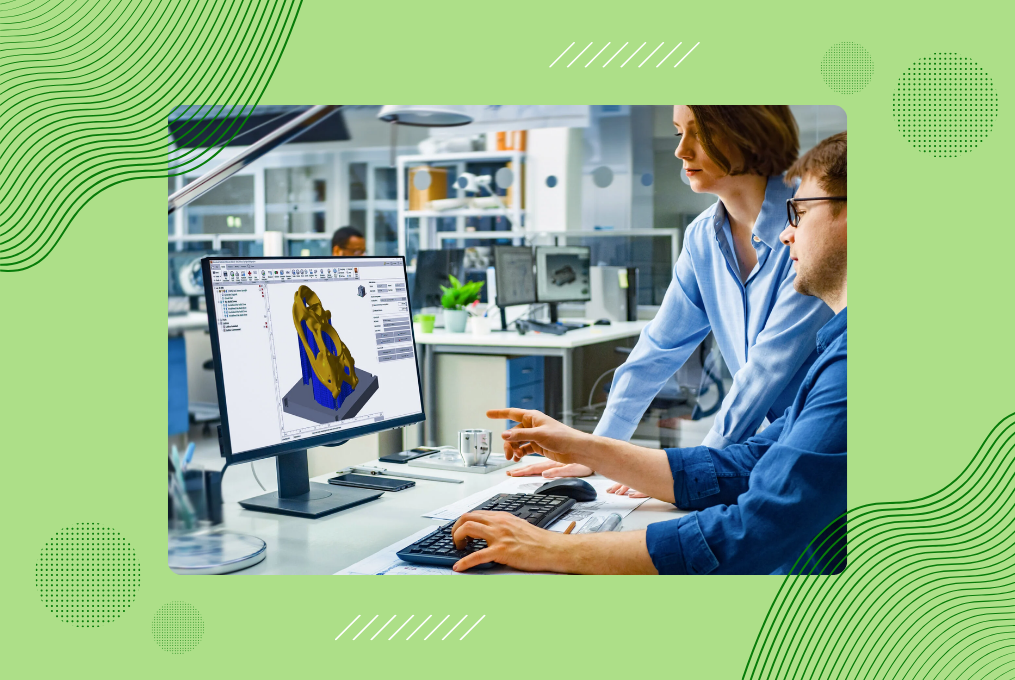
Ever looked at a 3D metal part so complex it seemed impossible to make—and then discovered it was printed? That’s the magic of Design for Additive Manufacturing. It lets engineers and designers unlock shapes, strength, and efficiency that traditional tooling just can’t match. But with great power comes great responsibility. To truly benefit, one must know how to design correctly so the final part isn’t just beautiful, but functional, cost-effective, and manufacturable. Let’s dive into the essential lessons, trade-offs, and tips that will make your next metal 3D printing project a success.
What Is Design for Additive Manufacturing?
Design for Additive Manufacturing (DfAM) is the process of creating parts specifically optimized for 3D printing technologies rather than simply adapting designs meant for traditional methods. Unlike conventional manufacturing, where limitations of machining, casting, or moulding dictate the design, DfAM leverages the freedom of additive processes to enable lightweight structures, complex geometries, internal channels, and part consolidation.
The goal is to fully utilize the strengths of 3D printing—such as reduced waste, faster prototyping, and customization—while addressing key considerations like material choice, build orientation, and post-processing needs.
Key Considerations in DfAM

When applying Design for Additive Manufacturing (DfAM), several factors directly influence print quality, functionality, and overall production efficiency. Keeping these considerations in mind helps engineers create parts that are not only innovative but also practical and cost-effective. The most important aspects to focus on include:
Material Selection – The choice of material impacts strength, durability, surface finish, and cost. Selecting the right metal, polymer, or composite ensures performance and minimizes unnecessary post-processing.
Build Orientation – The positioning of a part inside the printer affects its structural integrity, surface quality, and the need for supports. Optimizing orientation reduces warping, weak layers, and finishing time.
Support Structures – Supports are essential for stabilising overhangs and fine details but can increase build time and removal challenges. Smart design minimizes support while maintaining accuracy.
Complexity vs. Functionality – Additive manufacturing allows complex geometries, but not all complexity adds value. Simplifying designs when possible, improves reliability, reduces costs, and speeds production.
Surface Finish & Post-Processing – Most parts require polishing, machining, or coating after printing. Planning for these steps during the design phase ensures technical performance and visual quality.
DfAM Best Practices

Here are time-tested DfAM best practices that help maximize the benefits:
Use topology optimization tools to remove unneeded material and create lattice or organic structures where possible.
Design internal channels or cooling pathways to optimize thermal performance or weight.
Avoid steep overhangs; aim for overhang angles that minimize support infiltration.
Maintain minimum wall thickness based on your material and printer; too thin and parts deform, too thick and you waste material and time.
3D Printing Design Guidelines
These 3D printing design guidelines help ensure parts are manufacturable and reliable:
Set realistic tolerances: understand what your printing process can achieve in terms of dimension, surface roughness, and distortion.
Define minimum hole sizes and feature resolution upfront. If a hole is too small, it may not reliably form or later be cleaned out.
Use unified design standards for features like fillets (to avoid stress concentrations), draft angles, and consistent wall thickness.
Where possible, group features so that support removal and post-processing are easier.
Challenges & Limitations
Despite its advantages, DfAM comes with certain challenges and limitations that designers must address, including:
Cost: Material cost, machine time, and post-processing all add up. Sometimes simpler machining or casting might still be cheaper if volumes are high.
Printer constraints: Build volume, layer resolution, available materials, and machine precision differ widely between machines. What works in one printer might fail in another.
Standardization and repeatability: Ensuring that parts printed today match those printed months later can be hard changes in powder lots, calibration, etc.
Wrapping Up!
By adopting Design for Additive Manufacturing from the early stages—not after the design is locked—you’ll get parts that are stronger, lighter, more efficient, and more beautiful. Material choice, orientation, support structures, and post-processing aren’t afterthoughts; they are core parts of your design thinking. Apply the DfAM best practices and 3D printing design guidelines we discussed, and you’ll lead projects that push boundaries in performance—and in cost savings. Ready to design differently?